.svg)

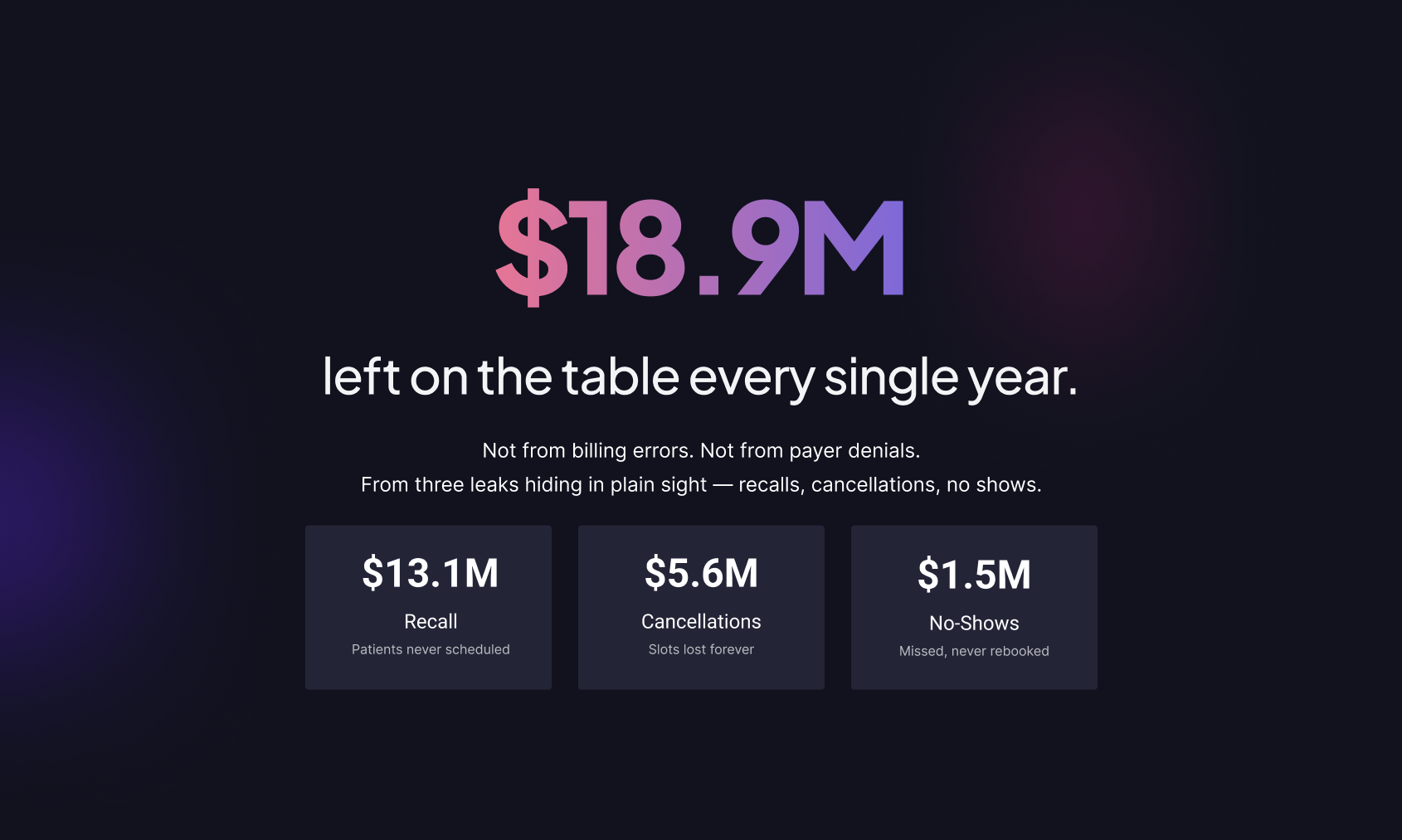
Gotham Gastro is a 30+ provider GI group based in New York City, with more than 20 front office staff running a recall engine that could generate $13 million a year in potential revenue. The data exists. The staff exists. The recall lists exist. Conversion isn't happening and the gap adds up to $18.9 million left on the table every single year, not from billing errors or payer denials, but from three leaks hiding in plain sight: recalls, cancellations, and no-shows.
Why manual outreach fails
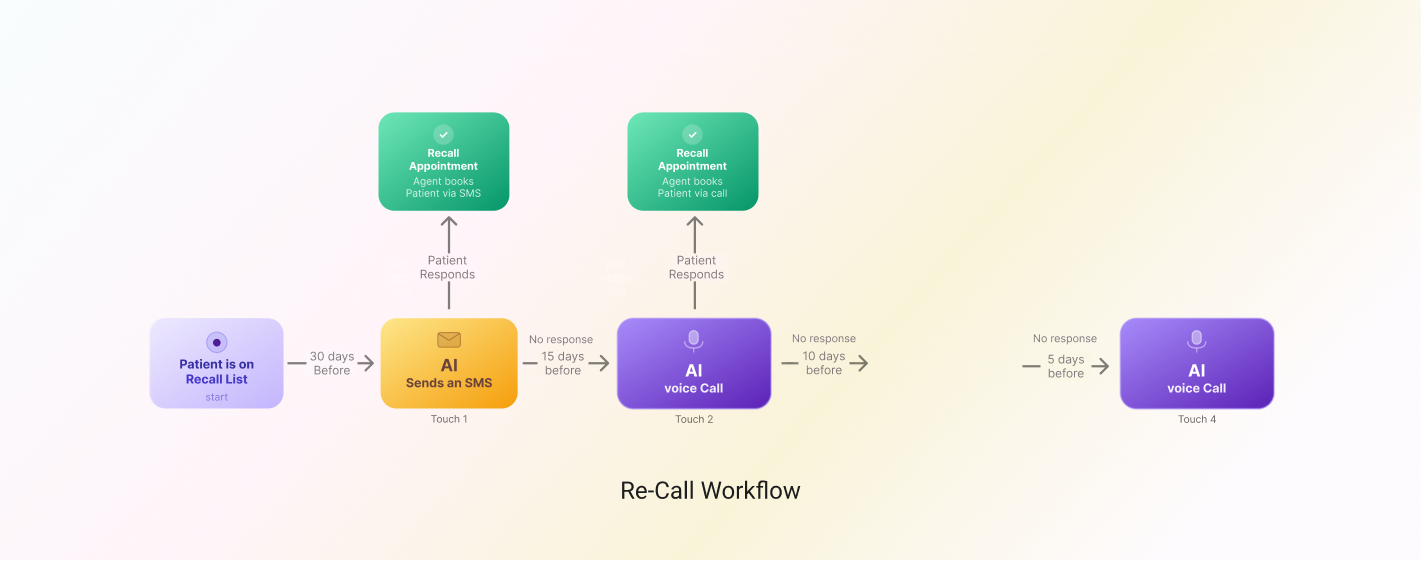
A typical recall attempt looks like this: a portal message goes out 15 days before the recall date, but the patient lost portal access months ago. A mailed letter follows at 10 days, never opened. A generic SMS blast goes out at 5 days, the patient marks it spam. Three touches over 30 days, and when recalls slip, patients don't just miss appointments. They miss diagnoses.
.png)
Front office teams aren't failing. They're understaffed for the task: juggling phones, check-ins, and insurance work leaves recall conversion deprioritized daily. Most patients get one call, then slip away. Peak calling hours don't align with patient availability. Evenings and weekends are when patients are actually reachable. And there's no protocol: each attempt is ad-hoc, not systematic.
How much of $18.9M can Gotham Gastro reclaim?
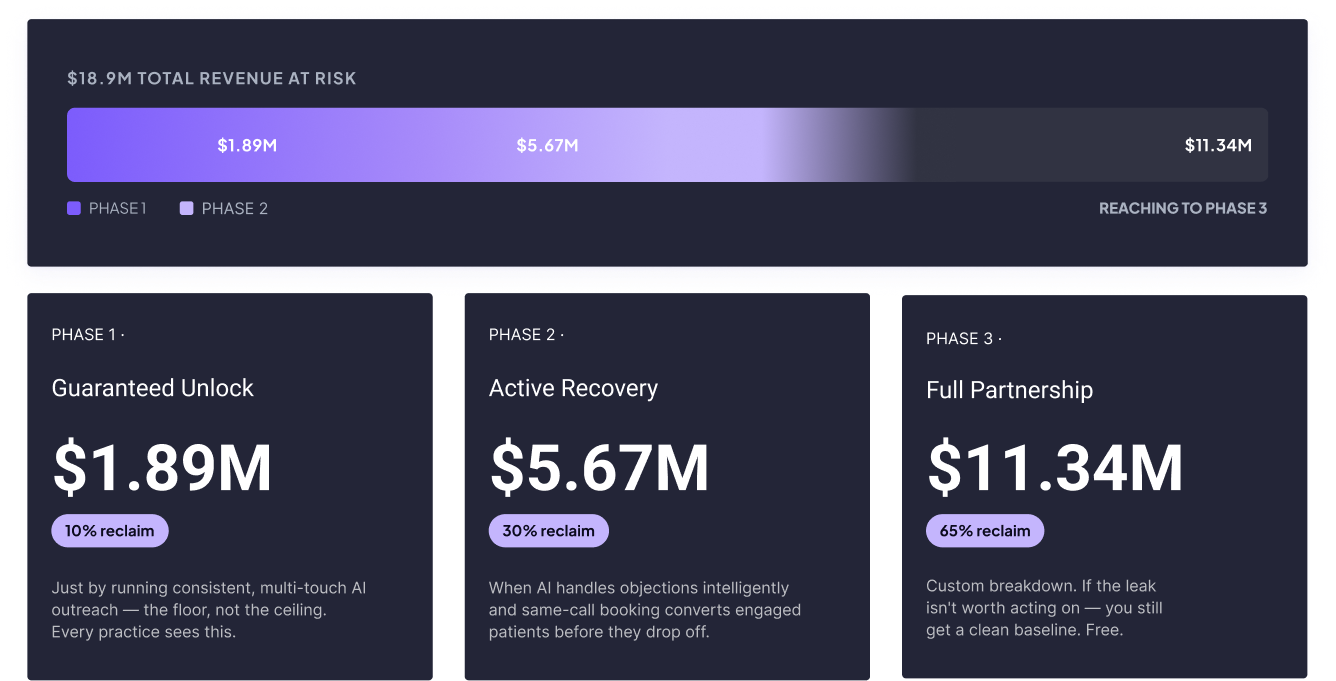
Phase 1: Guaranteed unlock $1.89M
Just by running consistent, multi-touch AI outreach; the floor, not the ceiling. Every practice sees this, simply by replacing ad-hoc single-touch attempts with a persistent, sequenced follow-up system.
Phase 2: Active recovery $5.67M
When AI handles objections intelligently and same-call booking converts engaged patients before they drop off, recovery moves well past the guaranteed floor.
Phase 3: Full partnership $11.34M
A custom breakdown specific to a practice's own procedure mix and cancellation patterns. If the leak isn't worth acting on, a practice still gets a clean baseline, free.
Not a text blast. A conversation that never stops.
NextDimension AI engages patients across voice and SMS with one persistent identity understanding intent, handling objections, and booking on the spot. The difference from a legacy outreach system is structural, not cosmetic:
- Intelligent conversation: not a one-time blast, but an AI agent that understands context, intent, and history
- Persistent multi-touch: sequenced across voice and SMS until the patient is resolved, one way or another
- Same-call booking: appointment booked on the spot, no "call us back," no conversion drop-off
What this means for your practice
The pattern holds across every GI practice we've modeled: the revenue isn't missing because of a billing problem or a payer problem. It's missing because the last mile of patient outreach — the follow-up call, the reminder, the reschedule offer — has no persistent owner. Fixing that last mile is a lower-effort, higher-leverage fix than almost anything else on a practice's operations roadmap.